📝 My Blog 📝
Welcome to my blog! Here I share my thoughts on coding, technology, and life. ✨
🎓 Education & AI
I'm deeply interested in how education, accessibility, and AI intersect — especially how we can use technology to build more supportive learning environments.
A short screen recording from my Education & AI work-in-progress.
The Orwellian Nature of Domestic Violence
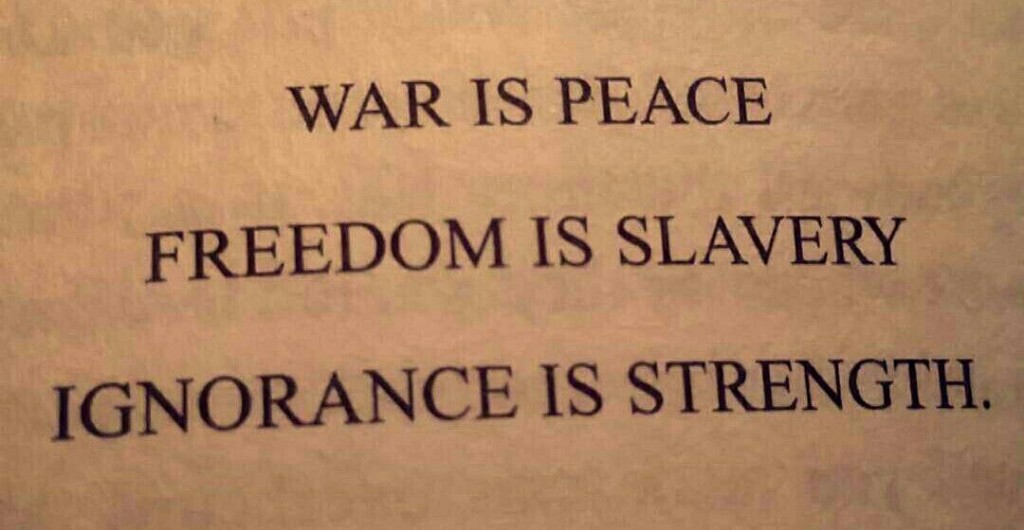
My final assault by my longstanding abuser was July 18th, 2026.
Since then, I have testified in court for my restraining order. I received that restraining order. I moved across the country. I started my fall semester. And I began going to therapy.
When I testified, the judge asked me a question I've heard in a hundred different forms: "Why didn't you leave sooner?"
I understand that I'm more than a few years past being a minor. But domestic violence doesn't work that way. I wrote about this shortly after:
September 2026 post from @marisummerss
The more I reflected, and the more time I spent sitting across from a therapist, the more I realized there was a better way to explain what I lived through. Domestic violence has a lot of parallels with dystopian novels. Particularly 1984.
Doublethink: 2+2=5
In 1984, the Party doesn't just want obedience. It wants you to believe that 2+2=5, and to believe it sincerely. Orwell calls this doublethink: holding two contradictory realities in your mind and accepting the one you're given.
Out of all the emotional, physical, and financial abuse I faced, doublethink was the worst. Because there were always two realities. Mine, and theirs.
You begin to question everything. You can be sitting there with literal bruises and still ask yourself: Did this actually happen? Do they care? Maybe they didn't mean it.
That is what doublethink does. It doesn't need you to forget the bruises. It just needs you to doubt what they mean.
I have had to speak with my abuser since July, because they have violated the restraining order multiple times. Their recounting of what happened on July 18th is vastly different from mine. But so is their account of my entire childhood.
To them, their actions were a form of love and compassion, rooted in the traditional parenting of their background.
In reality, it was child abuse. And then it was adult abuse.
Why People Abuse
When you search "why do people abuse," the answers are consistent. People abuse others to gain power, control, or dominance. Abusers often feel entitled to control the people around them. They use fear and intimidation to keep the upper hand when they feel threatened. And they shift blame onto their victims, or onto outside stress, instead of taking responsibility.
Blame-shifting is doublethink in practice. If the story can be rewritten so it was your fault, or so it never happened at all, then the abuser never has to be accountable. A victim who doubts her own memory is a victim who stays.
Big Brother Is Always Watching
In 1984, Big Brother is always watching. In my home, that slogan worked the other way.
My abuser hated when I recorded or took pictures of them in the middle of their acts. Because you can't argue with pictures or videos. You can't doublethink a recording. Evidence was the one reality they couldn't overwrite.
So in a strange way, I became Big Brother. The camera was the only witness that couldn't be convinced 2+2=5.
When the System Looks Away
But there was another kind of watching that failed me.
In high school, I told my school that my abuser had assaulted me. The system sent me home. Back to my abuser.
In the car, they asked me, "Did you tell?"
I responded with silence.
I'm pretty sure I was assaulted later that evening.
That is part of the answer to the judge's question. I did try to leave. I told the people who were supposed to protect me, and they returned me to the person I was afraid of. When you learn as a child that telling makes things worse, you carry that lesson into adulthood.
So, Why Didn't I Leave Sooner?
Because it started when I was four years old. That is my earliest memory of domestic violence. I don't remember a time before it.
Because when I told, the system sent me back.
Because for years, I was taught that my own eyes were lying to me, and that what I called abuse was actually love.
Leaving isn't one decision you make on one day. It's the slow, exhausting work of taking back reality. Of saying, out loud and in a courtroom if you have to: 2+2=4.
There is so much more I could say. But I'm still wrapping my head around my exit from my dystopian household, and some of it I don't have words for yet. If you are reading this, you are not alone.
You Can't Hurt Me
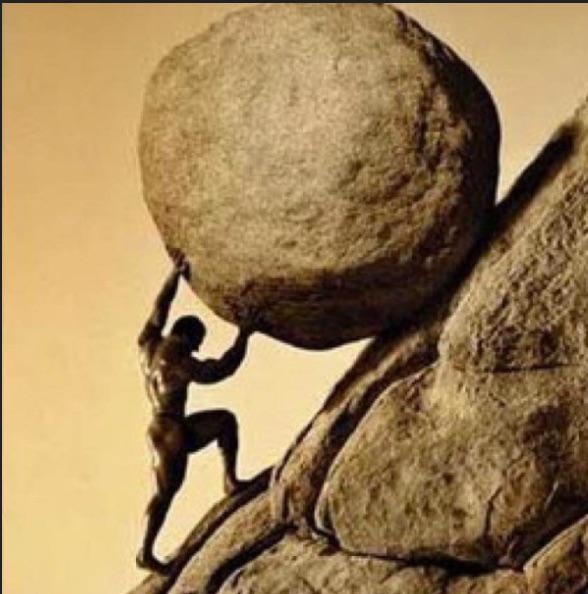
Can't Hurt Me by David Goggins is one of the most relatable books I've ever read.
I found it while googling books to read when you're going through a tough time. At that point I was still in the middle of an ongoing health battle, with a second appointment with my oncologist and hematologist still looming. I had already left a software engineering job I loved so I could move closer to my family (begrudgingly, they're complicated), help them financially, and get care from doctors who'd actually known me for more than one visit.
Reading it felt less like discovering a new philosophy and more like someone finally putting language to how I'd already been living for 25 years: go through it, keep going, don't whine about it. Goggins calls this "callusing the mind," the idea that the more you willingly walk into hard things and come out the other side, the less any single hard thing can break you. I didn't read that concept and learn it. I read it and recognized it.
So here's the s**t I went through. Hell and back. I got my first tech job at 17. Not through a career fair or a referral. I cold-called startups in my area until one said yes. That instinct, figure it out yourself, ask before you're ready, started a lot earlier than that.
My first memory of domestic violence was when I was four. I knew I wanted out of my home so in eighth grade I applied and successfully got into Madeira, one of the most exclusive boarding schools in the country, with financial aid. I wasn't allowed to go. I stayed in the situation I was trying to leave, 25+ years of domestic violence in my home, and rebuilt my plan from public school instead.
I tested into Maryland's top gifted and talented program on a perfect literature/quant PSAT score (same program Sergey Brin came out of, for what it's worth). I was one of the only kids there who didn't fit the room, and I got bullied for it by people on both sides of that line. I switched high schools three times in four years, which happened to be the peak of the abuse at home. CPS spoke to me three separate times. A foster placement almost happened and then didn't.
I still won the National Center for Women in Technology's Aspirations in Computing Award twice. Did FIRST Robotics. Landed a tech internship at 17. Stayed on varsity swim the whole time. My GPA, a 4.3 sophomore and junior year, did dip under the weight of everything else, though I still walked away with college credit from those AP classes so in short a win is a win. I went to an HBCU instead of the Ivy League I'd always pictured: full ride, big fish in a small pond, still commuting from the same house, still interning at a Fortune 500 companies on the side. Independence of thought, to me, has never been an aesthetic. It's what happens when nobody's going to build the ladder for you, so you build your own and you climb it anyway.
Some highlights from that stretch:
- Accepted into Management Leadership for Tomorrow as a Career Prep Fellow
- HBCU Venture Capital Fellow
- Founded a Girls Who Code club at my university that's still active today
- AmeriCorps, where I earned a perfect teaching score and now sit on the alumni advisory board representing California
- Ran my own tutoring company and worked in schools as a tutor
- Transferred to a PWI from my HBCU and took 46 credits between January and August 2024, pulling a 4.0 that summer semester while testing out of a large chunk of the requirements, for a computer science degree
I did all of this while dealing with hell at home: domestic violence, emotional abuse, financial abuse, and acting like everything was fine in public. If you know, you know.
During that same period, I lost four people: my two aunts on my mother's side, my godmother, and my cousin, who was shot before he ever got the chance to walk his graduation stage.
His death landed right in the middle of the most brutal stretch of that 46-credit semester. It should have broken my focus completely. Instead it did the opposite. It made staying exactly where I was, doing exactly what I'd been doing, feel impossible. There was nothing left for me back where I was from, and I knew it with total clarity.
Goggins talks about a "cookie jar," a mental reserve of every hard thing you've already survived, that you reach into when the current hard thing wants to convince you that you can't. I didn't have a name for it back then, but I was already doing it. Every time I wanted to stop, I pulled from everything I'd already outlasted and kept moving. Like Mario running through the level: you don't stop just because you got hit. You keep it moving.
Still Showing Up
I graduated and moved to San Diego to work at Homes.com, where I survived two rounds of layoffs and pulled stellar performance reviews the whole way through, the kind of thing that reads like a clean bullet point on LinkedIn and was actually just relentlessness wearing a different outfit.
The entire time I was in San Diego, I was also freelancing and tutoring on the side. Not for extra savings. Because I was supporting three family members back on the East Coast who were dealing with health issues of their own. I kept making my deadlines. I kept showing up. There was a day I passed out at daily standup and got sick at my desk, and I still found a way to push through and keep moving. Eventually the math stopped working: San Diego rent plus money sent home wore me down faster than I could keep up with, on top of stress-related health issues of my own that needed real care. So I moved back to help my family more directly and finally get seen by doctors I trusted.
I don't tell that part to make it sound noble. It wasn't sustainable, and I know that now. But it's true, and it's part of how I got here.
Around that time, I got into the Roblox Jumpstart program, where, thanks to the TikTok algorithm, I found my cofounder, Jasmine Chimona.
My abuser insisted on accompanying me to the Roblox Inspire Cafe event in NYC. The night after the conference, they assaulted me.
I kept going. The police were called. They had taken my cards and cash. With the help of members of my chosen family, I got a new hotel room, and the next morning I still showed up for our promotional photoshoot for our Roblox game with my cofounder. I didn't tell her what had happened. I just did the work, because I wanted everyone on the team to still get to have a good day. I don't say that to be a martyr about it. I say it because it's the most honest example I have of what leadership has actually cost me, and what I chose to protect anyway.
Another incident followed, and I left NYC with a member of my chosen family, traveled up the coast, and got a restraining order against my abuser. I wore men's clothes and random hand-me-downs, because all I had with me were the clothes from the conference. Then I moved to the SF Bay Area to finish my master's.
What Nobody Tells You About Waiting
In court, I was asked why I hadn't left sooner. Why, once CPS failed me and I'd accepted the situation as my norm, I didn't cut ties even while living across the country from my abuser. In the meantime, wellness checks kept getting sent to my apartment, a form of retaliation, and I didn't want it to escalate into police showing up at my job.
So I waited.
Navigating domestic abuse is a tricky. Move too fast without enough in place, and you end up back in the same situation, except worse. Move too slow trying to get everything perfectly lined up, and you stay stagnant while the cycle just continues. It's a waiting game. I waited, and in the waiting, I built a career and finished my education anyway.
Eventually, I found my opening: the assault. It gave me my restraining order and let me finally cut ties for good.
Domestic violence is tricky, and it doesn't always come with visible signs. I was forced to look put-together to hide what I was living through, or threatened with more violence if I tried to report it. If you're dealing with something similar, I'm sending you love and support.
Getting assaulted became the catalyst, the moment where everything I'd been carrying finally surfaced somewhere it couldn't be hidden anymore. In a strange way, it was one of the best things that ever happened to me.
Moving Forward
Now I'm actively enrolled in therapy, and actually planning to enjoy the rest of my twenties.
Goggins has this idea he calls the accountability mirror: sitting with yourself and telling the truth about what actually happened, instead of the version that's easier to live with. That's what writing this has been. Not a highlight reel. The truth, at full volume, for once.
So his title turned out to be right. You can't hurt me. I'll just get back up.
🚀 Four Things I Have Learned from Working at a Startup
📅 August 18, 2025 | Previously published on my Medium in 2022
I am a rising junior in college and a computer science major with a passion for science — especially computer science. So when I was able to apply what I had been learning at school as an engineer for a startup (not just any startup, but one that rebuilds the internet for you), I said YES. Throughout my time working as a software engineer at Sonr, I have learned things I would not have in the traditional college setting. Here are the four main lessons I have learned:
1. School is a starting point — it is up to you to finish the rest
My computer science coursework mainly focused on object-oriented programming, and the fact that I have taken applicable math and science courses has aided in the comprehension of my work tasks. However, working in the field has gifted me with irreplaceable knowledge. For example, in the classroom, we are not working in teams, so using Git Flow did not apply to the scope of our coursework. While working at Sonr, I have been able to learn and apply Git Flow. Git Flow is one of the most common tools used by engineering companies; it describes the project's release cycle and adds specific roles to different branches.
2. You don't learn to swim by reading a book on how to swim
During the school year, one of my greatest resources was my textbook; it was essential to read before lectures. However, to be a good programmer, you don't just read or solve school problems; you build. I had two goals this year: get a certification and add more to my GitHub because my GitHub was actually barren. I can proudly say I have achieved both goals. I received my Chainalysis Cryptocurrency certification, and my GitHub has new additions from work and personal projects. I used to fear personal projects, but with the coaching of my coworkers, I have begun to make them. Currently, I am working on personal projects that intertwine my love of art and science, such as a Y2K-inspired GitHub-hosted website and a pink tic-tac-toe game.
3. Feel stupid every day
Before my job, I had reached a plateau. I was doing well in school, but I knew there were things I needed to learn because "the wise man knows what he does not know." Working at a startup gave me the ability to learn what I didn't know and learn things ahead of when I would be in school. Therefore, I am confident this upcoming fall semester will be less taxing than previous semesters.
4. Read about everything
In our office, there are a lot of books. Books about math, science, philosophy, and more — you name it. One thing I've noticed from reading and absorbing a multitude of literature is that it makes you a better thinker and person. By exposing yourself to a variety of literature, you open your mind to diverse thoughts and perspectives and start to see the world differently.
Working at Sonr has made me a better learner, thinker, developer, and person. It has shown me how to be resilient, work harder, and adapt to change. This is your sign to go work at a startup. ✨
👔 The Manager: Meeting Your Workplace Fate (and How to Prepare)
📅 August 15, 2025
The manager, also known as the person who decides your workplace fate (just kidding, but only a little). Good managers are critical in one's first job out of undergrad. They play a pivotal role in the trajectory of one's career growth and professional development.
I met my manager on Superday when he interviewed me. Ultimately, my Superday was successful, and I got hired for the job—yay! However, being hired is one thing; doing well on the job is another. I believe in the power of preparation because, as Benjamin Franklin said, "By failing to prepare, you are preparing to fail."
Therefore, I decided to meet with my manager months before my start date to ensure I had knowledge of the tech stack and more insight into the company culture. I prepared for the meeting by making a list of questions reviewed by my career coach. Each question was divided into three categories: tech stack, company culture, and engineering team culture.
📋 My Question List:
- What are the expectations within the first 30 days of the job?
- What is your culture around problem-solving?
- When will I have a chance to meet the team?
- What project will I be joining what are the expectations - goals -and outcomes?
- What do you like about the culture, what would you change?
- How can I be an asset to the culture?
- Will we be meeting regular basis?
- Who will I be asking questions in the beginning?
- What does Day 1 look like/ what are the logistics?
- What technical things I can learn now to prepare?
I highly encourage every new SWE to set up a meeting with their manager early to begin building a strong relationship. ✨
🤖 AI Ethics in Software Development
📅 August 12, 2025
As AI becomes more integrated into our daily lives, it's crucial to consider the ethical implications of the software we build. Here are my thoughts on responsible AI development...
Read more →📚 My Reading Challenge: 50 Books This Year
📅 August 15, 2025
I've set a goal to read 50 books this year! Here's my current progress and some of my favorite reads so far. Reading has been such a great way to learn and grow...
Read more →🏠 Miniature House Design: A Creative Outlet
📅 August 12, 2025
When I'm not coding, I love working on miniature house designs. It's a perfect creative outlet that helps me relax and think differently about design and space...
Read more →More posts under construction.